
software simulation can help in prototype circuit board assembly
The ability to run a software simulation on the computer rather than on a real-world system saves a significant amount of time and money. Simulating a process allows engineers to ask “What if?” questions and determine whether certain design changes would improve the performance of the finished product. Without this capability, testing every possible outcome of a change on the actual system would be prohibitively expensive and time-consuming.
Simulation involves building a mathematical model of the system and using it to replicate a particular scenario. This model can include information such as physical dimensions, environmental conditions and material properties. It also includes mathematical representations of the system’s physics and behavior.
The simulation software then uses these models to predict a result of a scenario. Simulation results can then be compared to actual test data to validate the accuracy of the simulation. A good simulation software will use a simulation language to enable easy changes and error detection. It should also use a block diagram approach to simplify coding, and provide visual results.
It is important that the simulation tools you choose support the physical phenomena you are modeling. Changing the physical parameters of your model can greatly impact your simulation results. This is why the best simulation tools will provide a variety of options to change physical characteristics and physics equations. This flexibility will help you optimize your simulations for your specific needs and accurately answer your “What if?” questions.
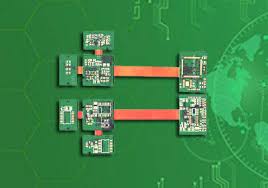
Several ways in which software simulation can help in prototype circuit board assembly include:
Cost Efficiency: Simulation reduces the need for multiple prototypes, saving money on rework and manufacturing costs. It also reduces the need for field testing, reducing expenses related to failures and returns. It also reduces engineering costs by allowing engineers to experiment with different design approaches and alternatives before investing in prototyping. It also enables more thorough analysis, improving design quality and safety.
Detection of Layout Issues: A comprehensive prototype circuit board assembly layout analysis can reveal problems such as inadequate spacing and poor routing. This can lead to short circuits, overloading and faulty connections. Simulation also identifies signal integrity issues, including ground bounce and ripple. These issues can cause problems with power delivery and create a noise problem in your PCB. A good simulation tool will combine power and signal integrity simulation in a single application to detect these problems.
Mechanical Reliability: Simulation can be used to track airflow and conductive cooling through a chassis or enclosure. This can reduce or eliminate heat build-up and other thermal management concerns that might compromise reliability. It can also help identify acoustic resonance and vibration problems before fabrication.
Lastly, simulation can be used to train and evaluate emergency response systems. This can include forest fire fighting, oil or chemical spill response, earthquake and disaster responses, law enforcement and military training. This is a very effective way to develop and train teams before they are actually placed in the field to ensure that they have the knowledge, skills and equipment required to perform their duties effectively and safely.