
PCB Be Used in Power Electronics
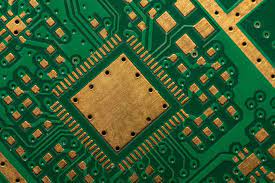
The PCB (printed circuit board) is an insulated plate that hosts a variety of electronic components. The copper foil is laminated onto the insulating material, and chemical etching divides it into conducting lines called tracks or circuit traces. These lines are fixed in place and act as wires, but the PCB is protected by a solder mask that prevents electrical contact with other parts of the board. The traces are insulated from each other by the surrounding dielectric material, which is often polytetrafluoroethylene (PTFE, also known as Teflon).
The holes on the PCB allow for insertion of through-hole or surface mount components. Through-hole components are affixed to the PCB with solder. The holes are drilled using computer-controlled machines that read a data file, which describes the location and size of each hole. The holes may be conductive or non-conductive. Conductive ones are used for the insertion of through-hole component leads, and non-conductive ones connect internal layers of the PCB.
Some PCBs feature a legend printed on one or both sides that contains information useful in assembling, testing, servicing and using the device. The legend includes component designators, switches settings and test points. It may also contain notes, warnings and other indications. The legend is typically printed with epoxy ink, although liquid photo imaging and laser printing are increasing in use.
A pcb board can be single-sided, double-sided or multilayered. Rigid boards are a popular choice because they can be produced in almost any shape and will remain that way throughout the product’s life. These types of PCBs are usually used in electronic devices that require a rigid form and high-reliability.
Can a PCB Be Used in Power Electronics?
PCBs are manufactured by using a specialized process that requires the creation of multiple layers. The most basic are two-layer boards with a layer of copper on both sides. More advanced boards have additional layers of copper and insulation inside them. Some of these additional layers are used as ground planes to improve signal integrity, lower EMI and enhance power supply decoupling.
The materials used in a pcb board determine its dielectric constant, which defines the speed at which signals propagate through it. This is especially important for high-frequency applications. A flat dielectric constant vs frequency characteristic reduces phase distortion, and also minimizes the effect of harmonics on signal quality.
Another important property of a pcb board is its thermal conductivity, which affects how much heat is dissipated. In high-power applications, a PCB needs to be designed with a large area for thermal management in order to handle the heat increase caused by the operation of the components. The best option is to use a Rogers RT laminate with a TC value of up to 1.44 W/mK, which handles power increases well and also ensures that the maximum power is dissipated evenly across the entire PCB. Other considerations include the thickness of the substrate and its track width, which impacts the amount of heat generated and how it is distributed.