
flexible PCB boards be used in military applications
Printed circuit boards, or PCBs, are a key component in electronic devices. When designed correctly, they provide a reliable, low-cost way to connect components and ensure that all components are working properly. These circuits are found in a wide variety of devices, from mobile phones and computers to automotive and military equipment. Many of these applications require a combination of durability, flexibility and strength to meet the specific needs of the device. Rigid flex PCBs, which combine rigid PCBs that house components with flexible substrates, are often used in these demanding applications.
Despite their ruggedness, flexible pcb board must be designed carefully to ensure they can perform reliably in dynamic applications. This requires careful consideration of a number of design factors, such as trace spacing and bend radius. Additionally, it is important to minimize the length of critical signal lines and to avoid overlapping paths. These steps can help to prevent mechanical damage and failure of the circuit board during dynamic bending.
In addition to dynamic bending, flex circuits must also be able to handle high-frequency signals. To do this, a high-density flex circuit must use a dielectric that offers excellent RF performance. The most common choice is a polyimide substrate, which can support tight bend radii of 3-10X the thickness of the copper foil.
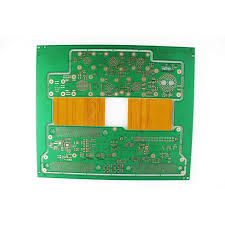
Can flexible PCB boards be used in military applications?
Another important factor in a high-quality flex circuit is its ability to withstand high temperatures and vibrations. This is crucial for military applications, where a circuit board must be able to operate in extreme conditions. A good quality flex circuit will also have an internal shield to protect against electromagnetic interference.
A flex circuit that is designed with these features will be able to withstand millions of dynamic bending cycles. To ensure this, manufacturers use specialized materials and construction methods that make the flexible circuit highly resilient to stress and strain. In addition to this, they incorporate plated through holes and use FR4 or polyamide stiffeners to provide additional structural support.
Rigid flex circuits are commonly used in military applications that require a combination of reliability and flexibility. They can be found in military equipment, such as night-vision goggles, and in aircraft electronics, including missile guidance systems. Additionally, they can be found in medical imaging equipment and vehicles that utilize advanced infotainment systems.
A flex PCB can be fabricated using several different processes. One common method involves etching the copper on a polyimide or FR4 substrate and then applying conductive ink to it. This is then cured with UV light. Another option for producing a flex circuit is to use hot bar soldering, which eliminates the need for a connector between a hardboard and a flex PCB. This method is particularly useful for integrating a flexible PCB into an existing device. It can also reduce production time and cost by eliminating the need for a specialized tool. In addition, a hot bar solder connection can be made faster than a traditional soldering process. Regardless of which technique is used, the resulting flex circuit should be tested for electrical faults and mechanical integrity before shipping.