
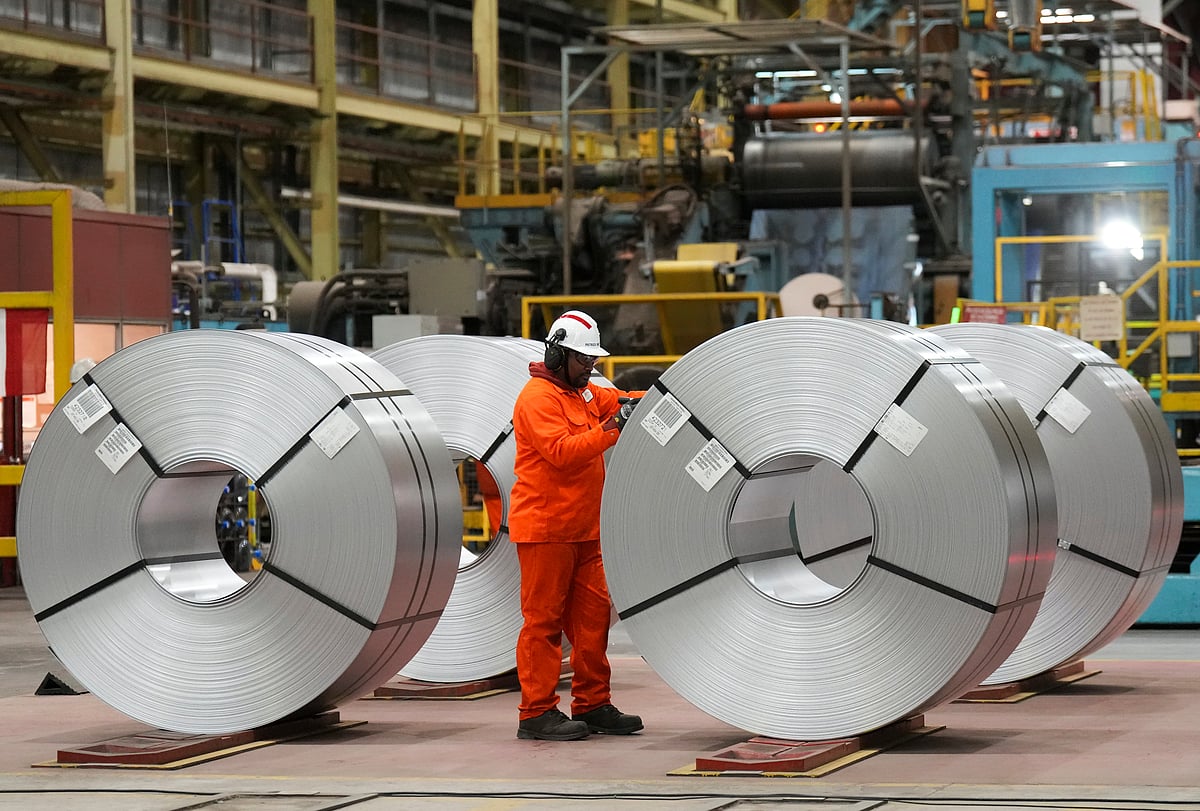
Steel cans
Tin mill steel is used for a wide variety of packaging, from soup cans to hairspray. And the US currently imports 70% of its tin mill steel, according to the Can Manufacturers Institute.
The institute said the more limited tariffs Trump imposed in 2018 resulted in the closure of nine tin mill lines in the US as manufacturers shifted to other types of steel or simply shut down. As a result, only three US tin steel lines remain open.
Mick Beekhuizen, the president and CEO of The Campbell Co., said in an earnings call last week that his company imports tin mill steel from Canada. Beekhuizen said Campbell is working with its suppliers to mitigate the impact of tariffs, but it may need to raise prices.
The Consumer Brands Association, which represents packaged food makers, said it’s urging the Trump administration to exempt aluminum and steel products that aren’t available in adequate quantities in the US Otherwise, consumers will likely see higher grocery prices.
“We encourage the Trump administration to recognize the different needs of different US manufacturing sectors,” said Tom Madrecki, vice president of supply chain resiliency at the Consumer Brands Association.
Autos
Most of Ford, GM and Stellantis’ steel and aluminum already comes from the United States, reducing the direct impact the companies would feel from higher duties. But experts have warned that tariffs might mean the three Detroit automakers have to raise their prices.
Domestic steel and aluminum producers will have to increase their capacity to meet demand or risk a short supply in the near term, making these products more expensive and driving up vehicle costs.
Another automaker who could feel the pain from tariffs: Elon Musk’s Tesla. During a January earnings call, Tesla Chief Financial Officer Vaibhav Taneja noted the uncertainty around tariffs.
“The imposition of tariffs, which is very likely,… will have an impact on our business and profitability,” Taneja said.
This could be detrimental to an already inflation-sensitive American car buyer. The average transaction price for a new vehicle was just over $48,000 last month, according to Kelley Blue Book.
And as with the steel and aluminum tariffs of Trump’s first term, automakers are likely to have to revisit their financial outlooks for the year as they brace for impact.
Appliances
Makers and sellers of products ranging from microwaves to dishwashers are considering how to navigate cost increases.
Some like Whirlpool, which produces 80% of what it sells in the US domestically, appear to be more insulated from the tariffs. Whirlpool executives told analysts at an investor conference earlier this month that Whirlpool has locked in contracts for a minimum of one year for most of its raw materials, including steel.
But Abt, a family-owned appliance and consumer electronics store in Glenview, Illinois, received notices this week from manufacturers that said they would raise the suggested retail price of countertop products like espresso makers and toasters anywhere from 10% to 15% starting April 1, according to Richie Palmero, the store’s small appliance buyer.
Abt sells coffee makers that range from $100 to $500, as well as espresso makers priced from $1,000 to $5,000. Palmero said that putting another $250 on the price of a $2,500 espresso maker is a lot, but she said she doesn’t think sales will suffer significantly.
“I think customers would still buy it because it’s good quality,” she said. “But they might think about it. They might take longer to buy it. It might not be an impulse buy. I don’t think they’re going to go down to Mr. Coffee or a $20 coffee maker.”