
Flexible PCB Printer Works With Flexible OLED Displays
Flexible printed circuit boards (PCBs) are a common component in today’s electronics. Often used in consumer devices such as tablets and smartphones, they offer design flexibility and lightweight functionality compared to traditional rigid boards. They can also be molded into complex three-dimensional shapes for use in products such as wearable health trackers and smart watches. These advantages have led to the widespread adoption of flex circuitry in products across multiple industries.
Until now, the major obstacle to wide-scale adoption of flex circuits has been that they are not cost-effective to produce in large numbers. But a new printing system developed by MIT spinout Kateeva could change that. Using a technique that is similar to inkjet printing, the company’s system can print layers of electrodes and emissive molecules directly onto an OLED display. In addition to cutting manufacturing costs, the system can also boost yields and reduce defects, making it more attractive for mass-production manufacturers.
Inkjet printing is a widely-used manufacturing process that is used to create everything from photographs to complex electronic circuits. The underlying technology uses droplets of specialty dispersions to coat a substrate with uniform layers of material. In the case of a flexible pcb printer, this would be conductive copper, usually covered with a layer of insulating polymer. To print the OLED display, the system deposits a layer of light-emitting molecules (OLMs) on top of this base layer.
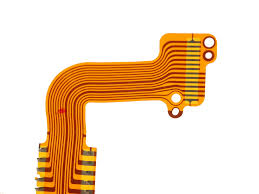
How a Flexible PCB Printer Works With Flexible OLED Displays
OLED displays can be made thin and light, while still offering bright colors and high contrast. They are also energy efficient and don’t require a backlight, making them ideal for flexible applications. They can even be curved, such as in the case of a swiveling television or an automotive display that wraps around a dashboard or instrument panel.
The new printing system developed by Kateeva, a startup co-founded by MIT graduates Conor Madigan SM ’02, PhD ’06; Fariborz Maseeh Professor of Emerging Technology Vladimir Bulovic; MIT Provost Martin Schmidt; grad student Jianglong Chen; and staff scientist Valerie Leblanc, works by using a special liquid metal inkjet printer that sprays a pattern of “droplets” of molten aluminum or other material over the OLED display surface. The liquid metal droplets form a thin film that can be easily manipulated by mechanical compression, resulting in stable and repeatable patterns of metal-oxide contact points that are electrically compatible with the display’s existing extrusion-printed top interconnects.
This enables the display to be integrated with a flexible power electronics circuit that can take in a variable voltage from a battery and produce a constant output of several volts, enough to power a variety of printed and organic electronic devices. The power electronics can be built on a flexible PCB along with the OLED.
To make a prototype of this flexible OLED pong game, Madigan and his team printed the OLED on a flexible PCB and connected it to an Arduino microcontroller. They uploaded the pong code from GitHub and watched the board play a simple game of pong on the OLED screen.