
Industries Commonly Use Rigid Flex
Rigid-flex circuit boards are a hybrid of rigid PCBs and flexible printed circuit boards (FPCs), offering the advantages of both. They offer flexibility in design, package geometry, and layer count while maintaining the precision, density, and reliability of a rigid PCB. Rigid-flex PCBs are a crucial component in many of the most demanding industries and applications, such as aerospace, medical, and military.
The high performance and durability of rigid flex allow for greater design flexibility, making it ideal for complex electronics and devices with limited space. They can withstand repeated movements, vibrations, and high currents. In addition, the encapsulated construction of rigid flex resists environmental threats like moisture and dust. Rigid flex also allows for noise isolation, which increases signal integrity by reducing interference and amplitude.
Ultimately, a rigid flex board is able to meet the needs of most critical applications due to its ability to withstand a wide range of conditions. Medical imaging equipment, military missile guidance systems, cameras and video cameras, and even vehicles use rigid flex PCBs to connect electronic components and enable them to perform their functions effectively.
As technological advancement demands slimmer, smarter devices with more functionality, it is essential to find engineering solutions that can accommodate these advancements. Rigid flex circuits are a crucial part of many of the most advanced products in the world, and they are the perfect solution for integrating multiple rigid components into a single device.
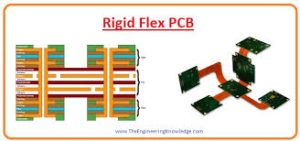
What Industries Commonly Use Rigid Flex?
Rigid-flex PCBs are made with a combination of rigid and flexible sections that are seamlessly laminated together. The rigid section is typically constructed from materials like FR4, while the flex portion can be built on a polyimide or other high-temperature film. Conductor traces run on both the rigid and flex sections, and the layers are connected with specialized terminations and pads.
Rigid-flex circuits can be produced in various ways depending on the requirements of a specific product, but they typically begin with an electronic engineer designing the PCB according to specifications outlined by the client. The files are then sent to a manufacturer that specializes in FPC and PCB production, where they are assembled to form the rigid-flex circuit. Because of the specialized fabrication techniques required, rigid-flex PCBs are generally best suited for medium-to-high-volume production runs. For low-volume production or prototyping, other types of PCBs may be more suitable.
Adhesives play a crucial role in bonding the layers of rigid-flex PCBs. They are used to attach the flexible layers to the rigid layers and to bond the copper foil to the substrates. Common adhesives include acrylic, epoxy, and polyimide-based formulations. The choice of adhesive depends on the specific application requirements, such as thermal stability, flexibility, and chemical resistance. Polyimide adhesives, for instance, are preferred for high-temperature applications.
In flexible sections, coverlays or overlays are used to protect the copper circuitry. Coverlays are typically made from polyimide films coated with an adhesive layer. They provide mechanical protection and electrical insulation, ensuring the durability and reliability of the flexible circuits. Overlays, on the other hand, are screen-printed flexible solder masks that offer a cost-effective alternative to coverlays for less demanding applications.